Posted on December 21st, 2020 by Mary Lord
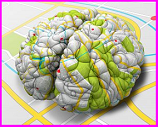 Join engineering educator Barbara Oakley, creator of “Learning How to Learn,” the world’s most popular MOOC, for an ASEE master class on using brain-science insights to create a practical guide for instructors of all levels. January 6-8, 2021, 1 to 4 p.m. Eastern. Register HERE.
Read More
Filed under: For Teachers, Grades 6-8, Grades 9-12, K-12 Outreach Programs, Special Features | Comments Off on ASEE Master Class on Effective Teaching
Tags: ASEE Master Class on Effective STEM Teaching, Barbara Oakley, Curriculum, Events, Grades 9-12, Professional Development, Programs for Teachers, Research on Learning, STEM education, Teacher Training
Posted on February 6th, 2020 by Mary Lord
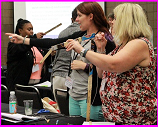 A new consensus report from the National Academies of Sciences, Engineering, and Medicine finds PreK-12 teachers of engineering lack preparation, support, and professional development. (Links to PD options and other resources included at end of this post.)
Read More
Filed under: K-12 Education News, Special Features, Web Resources | Comments Off on Report: K-12 Engineering Teachers Lack Support
Tags: American Society for Engineering Education, and Medicine, Building Capacity for Teaching Engineering in K-12 Education, Education Policy, Engineering, National Academies of Sciences, Professional Development, Research on Learning, STEM education, teacher preparation, Teacher Training
Posted on January 31st, 2020 by Mary Lord
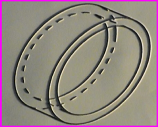 It began with a conundrum: How to accommodate a blind mechanical engineering major who needed to take a required engineering graphics course but couldn’t access its computer-assisted design system. Steven Zemke, a professor of engineering and physics at Whitworth University, figured out a way to teach fundamental visualization and drawing skills using assistive technologies such as braille pads – and small, 3-D-printed plastic parts that could felt and then sketched on special “swell paper” to show the raised lines like the example pictured here.
Read More
Filed under: Special Features, Web Resources | Comments Off on Teaching a Blind Student Engineering Graphics – A Case Study
Tags: American Society for Engineering Education Annual Conference, assistive technologies, Blind mechanical engineering student, computer-assisted design, Engineering Design, engineering graphics, Research on Learning, spatial visualization, STEM education, Steven Zemke, Whitworth University
Posted on September 4th, 2019 by Mary Lord
 American students spend more time studying science but perform less well than their international peers. That’s just one of the fascinating comparisons in the latest OECD Education At A Glance report, which analyzes data on topics from early-childhood education to time spent instructing students.
Read More
Filed under: K-12 Education News, Special Features, Web Resources | Comments Off on Education At A Glance 2019
Tags: early childhood education, international comparisons, OECD Education At A Glance 2019, research on education, Research on Learning, STEM education, teacher salaries, Website
Posted on May 20th, 2019 by Mary Lord
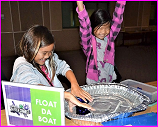 Pre-service and in-service middle school science teachers are sought for a graduate research project aimed at developing an assessment instrument to improve the teaching of engineering practices and incorporation of design in science classrooms, as outlined in the Next Generation Science Standards and other state science-education reforms.
Read More
Filed under: For Teachers, Grades 6-8, K-12 Education News, K-12 Outreach Programs, Special Features | Comments Off on MS STEM Teachers Needed for NGSS Study
Tags: assessment instrument, NGSS, Professional Development, research on K-12 engineering education, Research on Learning, research on STEM teaching, Teacher Training
Posted on January 10th, 2019 by Mary Lord
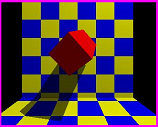 Spatial visualization – the ability to imagine objects from different angles – is a key STEM problem-solving skill that varies widely by gender, race, and cultural background. Yet it’s rarely taught. The University of Colorado-Boulder’s College of Engineering developed an inexpensive training program that closed STEM performance gaps so well it’s required of all incoming engineering students. The curriculum is now available for free online so any school can advance STEM equity.
Read More
Filed under: K-12 Outreach Programs, Special Features, Web Resources | Comments Off on STEM Equity? Teach This Key Skill
Tags: 3-D modeling, ASEE Prism magazine, Curriculum, Design, Engineering Plus, Internet Resources, Jacob Segil, Outreach, Research on Learning, Resources for Teachers, spatial visualization training workshops, STEM education, STEM equity, Technology for Learning, University of Colorado Boulder College of Engineering, Web Resources
Posted on July 18th, 2017 by Mary Lord
 Failure – and learning from it – is integral to engineering design but shunned in most classrooms. ASEE PreK-12 engineering authorities Elizabeth A. Parry and Pamela S. Lottero-Perdue examined how elementary teachers’ perspective and use of “fail words” can change to support inquiry and learning.
Read More
Filed under: K-12 Education News, Special Features | Comments Off on Research: Using ‘F Words’ in Elementary STEM
Tags: American Society for Engineering Education, elementary engineering, Elizabeth Parry, Engineering Design, learning from failure, Pamela Lottero-Perdue, research on engineering education, Research on Learning, research on teaching and learning, Teacher Resources
Posted on July 6th, 2017 by Mary Lord
 Real-time arctic research and a new teacher-proven tool for embedding engineering into your courses are among the ASEE presentations at NSTA’s annual STEM Forum & Expo in Orlando July 12 to 14. Join us!
Read More
Filed under: For Teachers, K-12 Education News, K-12 Outreach Programs, Special Features | Comments Off on Visit ASEE @ NSTA STEM Forum July 12-14!
Tags: American Society for Engineering Education, ASEE, Curriculum, Environmental Education, georgia tech, hands-on learning, jeff rosen, Liesl Hotaling, nancy ruzycki, NSTA, NSTA STEM Forum, professional development for teachers, Programs for Teachers, Research on Learning, sensors, STEM education, Teacher Training, university of florida
Posted on April 20th, 2017 by Mary Lord
Whether you’re seeking fun, immediately useful ways to enrich your STEM, literacy, or art classes, or an opportunity to network and learn alongside STEM teachers and engineering faculty from across the country, the American Society for Engineering Education’s annual PreK-12 Workshop in Columbus, Ohio is the place to be on June 24! REGISTER today!
Read More
Filed under: For Teachers, Grades 6-8, Grades 9-12, Grades K-5, K-12 Outreach Programs, Special Features | Comments Off on Join ASEE for Top-Flight PD in Columbus!
Tags: ASEE PreK-12 Engineering Education Workshop 2017, Columbus, Professional Development, Research on Learning, Teacher Resources, Teacher Training